
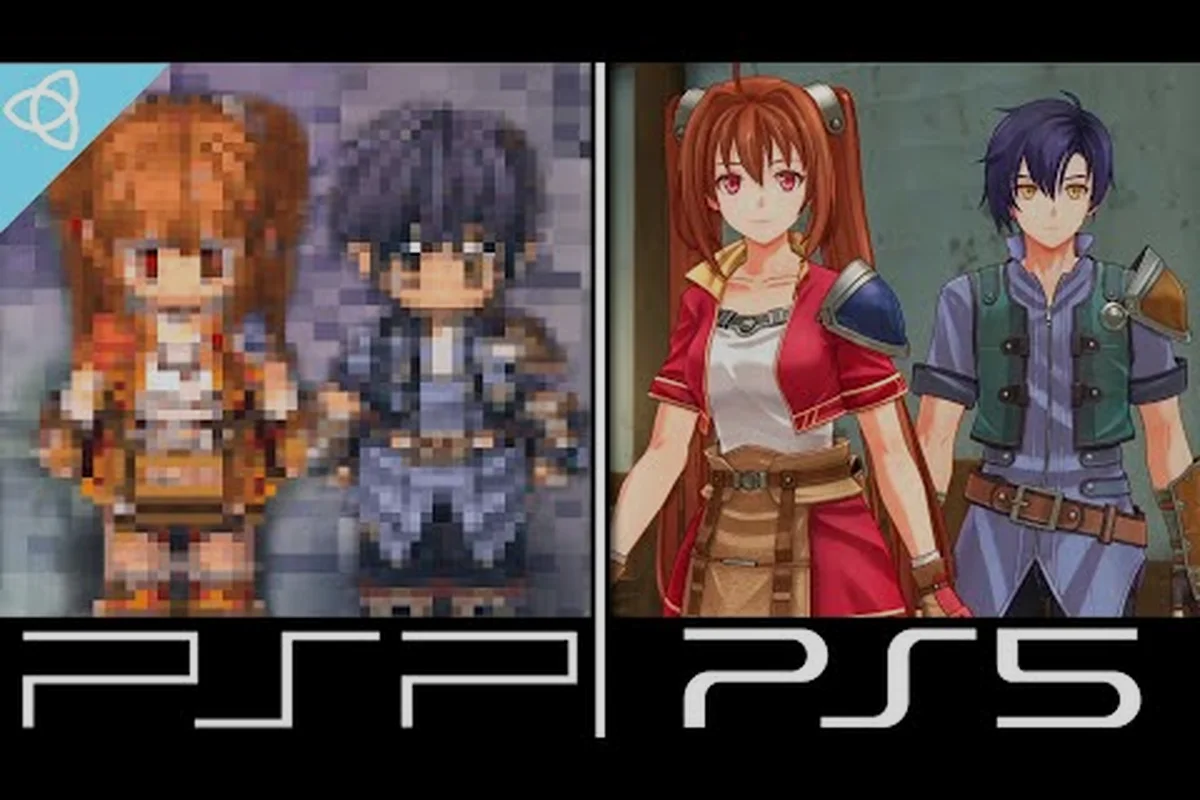
The Trails in the Sky 2nd Chapter graphics comparison matters more than ever because Falcom has rebuilt the entire game from scratch in full 3D, and long-time fans need to know exactly what changed before they commit to the remake. Get the full breakdown of how the Trails in the Sky 2nd Chapter remake transforms Liberl's landscapes, character models, and combat presentation while preserving the soul of the 2006 original.
Visual Overhaul: A Graphics Evolution
-
Character Models — 2D sprites with limited frames become full 3D models with detailed facial expressions.
-
Environments — static pre-rendered backgrounds become fully explorable 3D spaces with dynamic lighting.
-
Battle Presentation — top-down tactical view becomes an over-the-shoulder camera with cinematic attacks.
-
Cutscenes — text boxes with portraits become fully voiced scenes with movement and camera work.
-
Lighting and Effects — simple particles become real-time shadows, volumetric lighting, and weather systems.
The jump from the original 2D sprite-based presentation to the full 3D engine represents the single most dramatic shift in this remake's identity, and it affects everything from how you perceive scale in Liberl to how emotional cutscenes land during pivotal moments. According to the official GungHo announcement, this is a modern reimagining with beautifully updated visuals, reorchestrated music, and quality-of-life improvements that picks up directly after the 1st Chapter remake.
When you boot up the Trails in the Sky 2nd Chapter graphics overhaul, the first thing you notice is the shift from hand-drawn sprites to fully modeled characters that retain the iconic art style of the original concept art. The environments, which were once static painted backdrops with minimal animation, now feature dynamic lighting, weather effects, and destructible elements that make Liberl feel alive rather than like a diorama.
| Visual Element | Original SC (2006) | 2nd Chapter Remake (2026) |
|---|---|---|
| Character Models | 2D sprites with limited animation frames | Full 3D models with detailed facial expressions |
| Environments | Static pre-rendered backgrounds | Fully explorable 3D spaces with dynamic lighting |
| Battle Presentation | Top-down tactical view with sprite animations | Over-the-shoulder camera with cinematic attack animations |
| Cutscenes | Text boxes with portrait art | Fully voiced scenes with character movement and camera work |
| Lighting & Effects | Simple particle effects | Real-time shadows, volumetric lighting, weather systems |
The Trails in the Sky SC remake also introduces proper lip-syncing during dialogue, which was completely absent from the original release, and this alone changes how you experience emotional beats like Estelle's reunion with Joshua. Community feedback from the 1st Chapter remake's Steam reviews, which sit at an Overwhelmingly Positive 97% rating, suggests players have embraced this visual direction wholeheartedly.
Character Model Fidelity and Animation Quality
Falcom has clearly invested heavily in making the cast feel expressive, because every playable character and major NPC now has unique idle animations, combat stances, and reaction frames that were impossible with the sprite-based approach. The character models in the remake feature detailed costume textures, individual hair strands, and equipment that visibly changes when you upgrade weapons, which adds a layer of visual feedback that rewards attentive players.
The animation quality extends beyond simple walking cycles, since characters now have contextual animations for climbing, swimming, and interacting with the environment that make exploration feel more grounded than the original's simple movement patterns. Combat animations have been completely reworked to feature dynamic camera angles, impact frames, and spell effects that fill the screen with particle effects while maintaining readability during complex encounters.
Environmental Detail and World-Building
Liberl's diverse regions, from the bustling streets of Grancel to the serene forests of Bose, have received a complete environmental overhaul that emphasizes verticality and spatial storytelling. The environmental design now includes readable signposts, interactive objects, and hidden pathways that reward curiosity in ways the original's flat backgrounds never could, and this makes revisiting familiar locations feel genuinely fresh rather than nostalgic.
Weather effects play a significant role in the Trails in the Sky 2nd Chapter graphics comparison, because rain, fog, and sunlight now affect visibility and atmosphere during both exploration and combat. Night-time scenes feature proper light sources from lamps, windows, and magic effects, which creates a dramatic contrast with the daytime palette that the original game could only approximate through color tinting.
Technical Performance Across Platforms
The Trails in the Sky 2nd Chapter remake targets modern hardware with scalable options that accommodate both high-end PCs and more modest setups, ensuring that the graphics overhaul remains accessible to a wide audience. According to the Steam store page, the game is Windows-only on PC with English and Japanese full audio support, and it launches on September 16, 2026 (PT) with a worldwide release following on September 17.
Performance expectations vary significantly based on your hardware, though the game appears well-optimized based on early previews and the 1st Chapter remake's technical track record. The graphics settings menu includes adjustable resolution scaling, texture quality presets, shadow detail, and post-processing effects that let you fine-tune the visual experience to match your system's capabilities.
| Platform | Resolution Target | Frame Rate Target | Notable Features |
|---|---|---|---|
| High-End PC | 4K Native | 120+ FPS | Full ray tracing, ultra textures |
| Mid-Range PC | 1440p | 60 FPS | High textures, no ray tracing |
| Entry-Level PC | 1080p | 30-60 FPS | Medium textures, reduced shadows |
| Steam Deck | 800p | 30-40 FPS | Optimized preset, FSR support |
Load times have been dramatically reduced compared to the original, since the remake streams environments seamlessly rather than requiring screen transitions between areas. The technical performance improvements extend to the UI as well, because menus now open instantly and the world map renders without the multi-second pauses that plagued the original release.
Graphics Settings and Optimization Tips
To get the best balance between visual quality and performance, you should prioritize adjusting the shadow quality and ambient occlusion settings first, since these have the largest impact on both visual fidelity and frame rate. Texture quality matters most for character model detail, so if you have VRAM to spare, this setting should be your second priority after shadows.
The resolution scaling option is particularly useful for mid-range hardware, because it lets you render at a lower internal resolution while maintaining the UI at native sharpness, which preserves readability without sacrificing performance. Community testing suggests that the game's dynamic resolution system works well, and it can maintain a stable frame rate during busy combat sequences without visible quality drops.
Battle Visuals and Effects Overhaul
The Trails in the Sky 2nd Chapter graphics comparison extends deeply into combat, since the battle system has been completely reimagined with a focus on spectacle while retaining the tactical depth that defined the original. Crafts now feature multi-hit animations with screen-shaking impacts, while Arts spells create elaborate magical circles and particle effects that fill the battlefield with color and motion.
The battle presentation in the remake uses a dynamic camera that zooms in during character actions and pulls back for tactical overview, which keeps you informed of positioning while delivering cinematic moments. Enemy designs have been updated with more detailed textures and animations, and boss encounters feature unique intro sequences that establish the scale and threat of each confrontation.
| Combat Element | Original SC | 2nd Chapter Remake |
|---|---|---|
| Craft Animations | Simple sprite movements | Multi-hit cinematic sequences |
| Arts/Spells | Static effect overlays | Dynamic particle systems with lighting |
| Camera System | Fixed top-down view | Dynamic angles with zoom effects |
| Enemy Models | Static sprites | Animated 3D models with attack telegraphs |
| Damage Feedback | Floating numbers | Numbers plus hit-stop and screen shake |
The S-Craft ultimate abilities have received particularly impressive treatment, since they now feature full-screen cinematic sequences that showcase each character's signature move with dramatic camera work and lighting effects. These sequences are skippable for players who prefer faster combat pacing, but they add significant spectacle for those who want to experience the full visual presentation.
Art Direction and Style Consistency
Despite the massive technical leap, the remake maintains visual consistency with the original's art direction, because Falcom has preserved the character designs, color palettes, and architectural styles that defined the series' identity. The art direction bridges the gap between the classic 2D aesthetic and modern 3D rendering by using cel-shading techniques that keep characters looking like their original concept art rather than realistic human models.
The visual style extends to UI elements, since menus and battle interfaces have been redesigned to match the new presentation while maintaining the information density that veteran players expect from the series. Text boxes feature improved readability with better fonts and contrast, and the map interface has been updated to show more environmental detail while remaining easy to parse during exploration.
Remake vs Original: What the Graphics Overhaul Changes
The Trails in the Sky 2nd Chapter remake changes more than just how the game looks, because the visual overhaul affects gameplay readability, exploration pacing, and emotional storytelling in ways that veterans and newcomers will both notice. While the original relied on player imagination to fill in environmental details, the remake presents everything explicitly, which changes how you interpret certain scenes and locations.
The graphics overhaul introduces visual storytelling elements that didn't exist in the original, such as environmental clues that hint at upcoming events and character expressions that convey emotions during dialogue. This added layer of visual information makes the remake feel like a definitive version of the story, even for players who know the original inside and out.
-
Exploration readability: 3D environments make it easier to spot treasure chests, hidden paths, and quest objectives compared to the original's static backgrounds
-
Emotional impact: Character animations and voice acting create more impactful dramatic moments during key story beats
-
Combat clarity: Dynamic camera angles and effect telegraphs make it easier to read enemy attacks and plan your responses
-
World immersion: Weather effects, lighting, and ambient animations make Liberl feel like a living world rather than a game map
-
Performance trade-offs: The visual upgrade requires more powerful hardware, though scalable settings accommodate various systems
The Trails in the Sky SC remake also benefits from improved draw distances, which means you can see landmarks and points of interest from much further away than in the original. This changes how you navigate the world, since you can now orient yourself using visible landmarks rather than relying solely on the map screen, and it makes the world feel more connected and cohesive.
How the Remake Preserves the Original Experience
Despite all the visual changes, the remake carefully preserves the core gameplay loop, story structure, and character progression that made the original a beloved classic. The gameplay preservation ensures that veterans can jump in without relearning mechanics, while the visual upgrades make the experience accessible to new players who might be put off by dated graphics.
The Trails in the Sky 2nd Chapter graphics comparison ultimately shows a game that respects its source material while embracing modern technology, and this balance is what makes the remake successful. If you want to understand how the full game structure compares to the original, check out our original SC comparison guide for a detailed breakdown of content changes beyond visuals.
Visual Comparison Screenshots and Community Impressions
Early impressions from the community, gathered from Steam discussions and the official GungHo announcement, suggest that players are overwhelmingly positive about the Trails in the Sky 2nd Chapter graphics overhaul. The official release date trailer on YouTube, which has accumulated over 58,000 views, showcases the remake's visual capabilities and has generated significant excitement among the fanbase.
Community reports highlight the character model quality as a standout feature, with particular praise for how Estelle and Joshua have been translated into 3D while maintaining their iconic designs. Players have also noted that the environmental lighting during sunset and night scenes creates screenshot-worthy moments that capture the series' signature atmosphere.
| Community Aspect | Player Feedback |
|---|---|
| Character Models | Faithful to original designs with expressive animations |
| Environment Detail | Rich, explorable areas with meaningful visual storytelling |
| Battle Effects | Spectacular without sacrificing readability |
| Performance | Well-optimized with scalable settings |
| Overall Reception | Overwhelmingly positive, building on 1st Chapter's 97% rating |
The Trails in the Sky 2nd Chapter remake has set a high bar for how classic JRPGs should be modernized, because it demonstrates that visual upgrades can enhance rather than replace the original experience. For players who want to understand the full cast of characters that appear in these improved visuals, our all characters list provides a comprehensive reference.
What the Graphics Comparison Means for New Players
If you're new to the Trails series, the Trails in the Sky 2nd Chapter graphics comparison shows why this remake is the definitive way to experience this classic story. The modern presentation removes the barrier that dated graphics can create, allowing you to focus on the narrative, characters, and gameplay that made the original a landmark JRPG.
The visual overhaul also makes the game more approachable for players who are used to modern action RPGs, since the combat presentation is more dynamic and readable than the original's static tactical view. This accessibility, combined with the quality-of-life improvements mentioned in the official announcement, positions the remake as the perfect entry point for the Sky arc.
Frequently Asked Questions
What are the biggest visual differences in the Trails in the Sky 2nd Chapter graphics comparison?
The most significant changes are the shift from 2D sprites to full 3D character models, the replacement of static backgrounds with explorable environments, and the complete overhaul of battle presentation with dynamic cameras and cinematic effects. The remake also adds weather effects and dynamic lighting that make the world feel more alive.
Will the Trails in the Sky SC remake run on my PC?
The game targets scalable performance with multiple graphics presets, so it can run on entry-level hardware at 1080p with reduced settings while supporting high-end systems at 4K with ray tracing. According to the Steam page, the game is Windows-only, and community testing suggests the graphics overhaul is well-optimized with dynamic resolution scaling to maintain stable frame rates.
Does the graphics overhaul change how the game plays?
The visual updates primarily affect presentation rather than core mechanics, though the improved readability in combat and exploration does make certain elements easier to parse. The Trails in the Sky 2nd Chapter remake preserves the original gameplay loop, story structure, and character progression, so veterans can expect the same tactical combat and quest design with enhanced visual feedback.
Are the character models faithful to the original designs?
Yes, Falcom has preserved the original character designs and art direction while translating them into 3D using cel-shading techniques that maintain the classic aesthetic. The character models feature detailed textures and expressive animations that capture each character's personality, and community feedback has been overwhelmingly positive about how well the cast has been modernized.
When does the Trails in the Sky 2nd Chapter remake release?
The game launches on September 16, 2026 (PT) on Steam, with a worldwide release on September 17, 2026, according to the official GungHo announcement. The remake includes full English and Japanese voice acting, reorchestrated music, and the complete graphics overhaul that this comparison covers.